Japanese Industrial Townships (JIT) in India: Why Japanese Companies Choose MET City


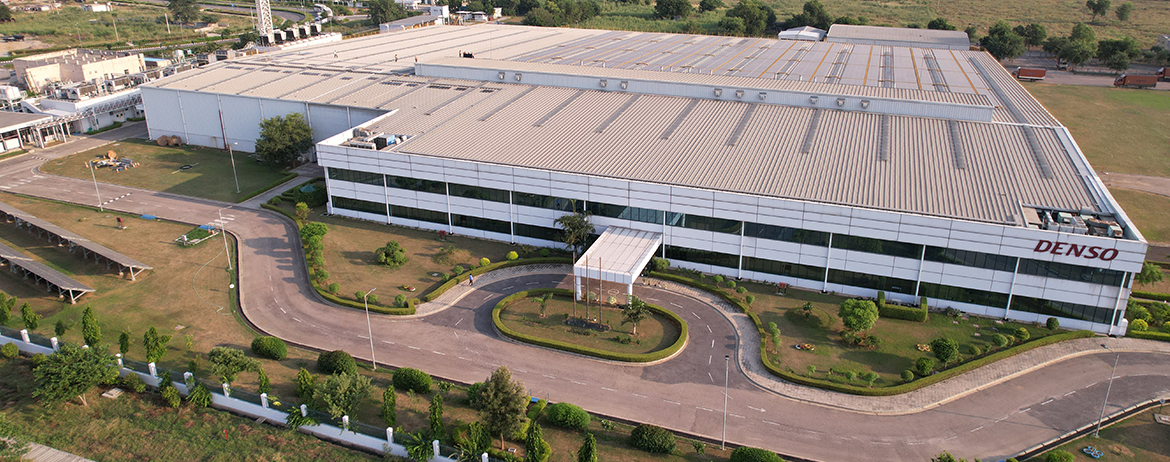
India’s emergence as a global manufacturing hub has undoubtedly strengthened its strategic partnership with Japan. At the heart of this collaboration lies the concept of the Japanese Industrial Township (JIT). This is a dedicated industrial ecosystem designed specifically to meet the operational, cultural, and governance expectations of Japanese companies.
These townships are not merely industrial parks. They are Japan-aligned manufacturing environments, built to support long-term investment, operational stability, and precision-led growth. Among them, Reliance MET City is setting a new benchmark for next-generation Japanese Industrial Townships in India.
What Is a Japanese Industrial Township (JIT)?
JIT refers to Japanese Industrial Townships, a government-supported, master-planned industrial ecosystem developed specifically to attract and support Japanese companies. It does so by offering:
- Japan-aligned infrastructure standards
- Simplified regulatory and approval mechanisms
- Plug-and-play industrial readiness
- Proximity to logistics and supply-chain corridors
- A stable, long-term operating environment
These townships are designed to replicate the predictability, discipline, and reliability that Japanese companies are accustomed to. At the same time, they allow companies to leverage India’s scale, workforce, and growth potential.
India–Japan Industrial Cooperation: The Foundation of JITs
The rise of Japanese Industrial Townships in India is rooted in strong bilateral cooperation. A key milestone was the India-Japan Agreement on Industrial Competitiveness and Development, which laid the groundwork for creating Japan-focused industrial ecosystems across the country.
Under this strategic framework, India committed to:
- Developing Japan-centric industrial townships and corridors
- Streamlining land acquisition and approvals
- Strengthening logistics via highways, freight corridors, and ports
- Ensuring long-term policy and investment stability
Japan, in turn, encouraged its companies to diversify global manufacturing bases and promoted India as a trusted production and export destination.
This partnership resulted in the development of Japanese Industrial Townships that go beyond land and utilities. These townships offer a holistic and future-ready manufacturing environment.
The Evolution of Japanese Industrial Townships in India
Japanese Industrial Townships across India share several defining characteristics:
- Master-planned industrial infrastructure
- Reliable power, water, and utilities
- Seamless multimodal connectivity
- Clustering of Japanese and global suppliers
- Governance frameworks aligned with global best practices
Together, these elements help Japanese companies operate with predictability, operational control, and long-term confidence. These are critical factors for sustained manufacturing investments.
Reliance MET City: Haryana’s Only JIT
Reliance MET City represents the evolution of the Japanese Industrial Township concept. It is designed not only for today’s manufacturing needs, but also for future-ready and globally competitive operations.
Strategically located with excellent access to highways, expressways, and major industrial corridors, MET City enables seamless domestic and export logistics. Its integrated planning ensures that industrial, social, and business infrastructure work in unison.
7 leading Japanese companies have trusted Reliance MET City as their launchpad for further growth. These are:
- Panasonic
- Denso
- Sanko Gosei
- Tsuzuki India
- Svam Toyal
- Nihon Kohden
- Nambu
Why MET City Is A Preferred Destination for Japanese Companies
- Japan-aligned industrial infrastructure built for scale and precision
- Ready-to-develop industrial plots with plug-and-play ecosystem that significantly reduce time-to-market
- Robust logistics connectivity supporting national and global supply chains
- Stable, business-friendly governance aligned with global investor expectations
- Future-ready planning with sustainability and digital infrastructure at its core
For Japanese manufacturers, this translates into operational certainty, long-term scalability, and ecosystem-led growth.
Why Japanese Companies Prefer India’s Japanese Industrial Townships
India’s Japanese Industrial Townships offer a compelling value proposition.
- Scale without compromise: Companies can expand in India without infrastructure bottlenecks.
- Skilled workforce: Indian workforce and talent is capable of supporting advanced manufacturing.
- Policy continuity: Policies like HEEP 2020 offer reduced long-term investment risk.
- Ideal ecosystem: Integrated townships offer the ideal ecosystem for hitting the ground running over isolated factories.
Townships like Reliance MET City are increasingly viewed as strategic extensions of Japanese manufacturing networks. They support both domestic demand and global exports.
A New Era in Indo-Japanese Trade Relations
Japanese Industrial Townships are shaping the next chapter of India-Japan industrial collaboration. As manufacturing becomes more complex and globally integrated, companies need more than land. They need reliable ecosystems.